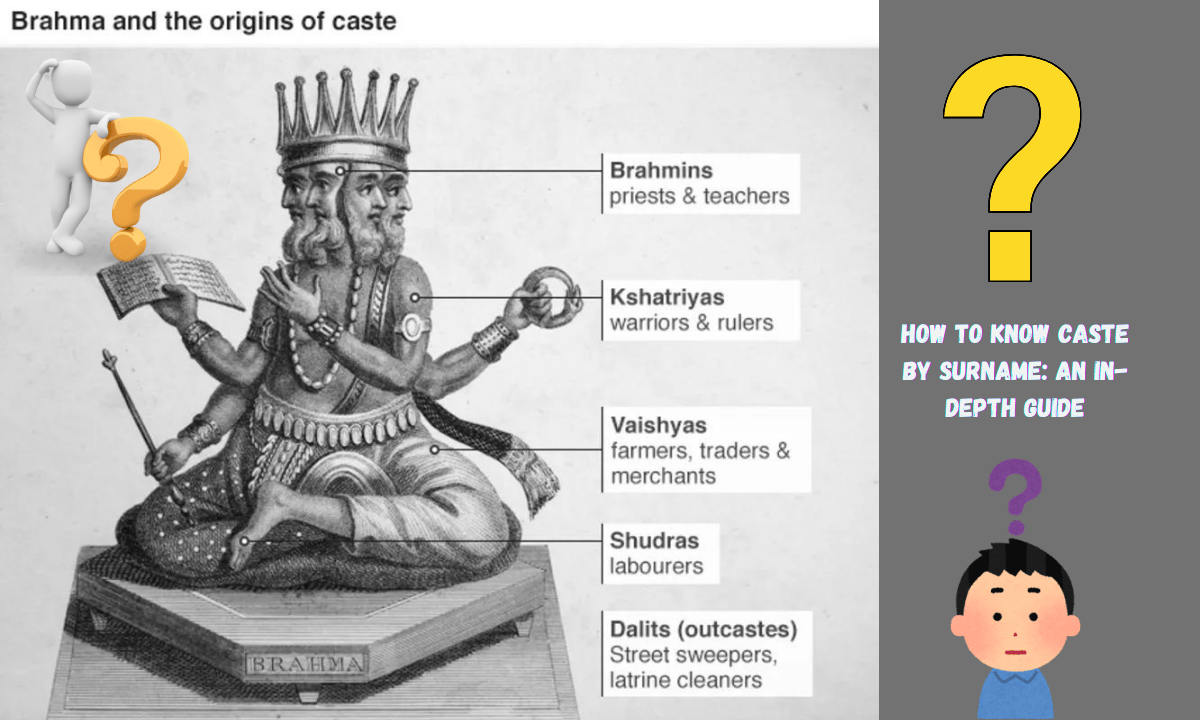
Can you find someone’s caste by their surname in India? Often yes — a surname can hint at a family’s traditional community, region, and occupation. But it is a clue, not proof. The same surname can belong to different castes in different states, and many families use neutral surnames by choice. This guide covers how the surname-caste link works, state-wise surname lists, and the right way to verify caste officially.
Can you know caste by surname?
A surname can suggest a person’s likely community or caste background — for example, Sharma is traditionally associated with Brahmins and Patel with Gujarat’s Patidar community. But surnames are not definitive: Singh, Kumar, and Das are used across many castes and religions. The only reliable way to know caste is official documentation, such as a caste certificate.
Note: This article is for informational purposes only. Caste-based discrimination is prohibited under the Constitution of India, and a surname should never be used to judge or treat anyone differently.
What is Caste?
Caste is a traditional system of social stratification in India. It historically influenced marriage, occupation, and social interactions. While its influence has reduced due to legal reforms and societal change, caste still matters in specific contexts — government certificates, reservation policy, and matrimonial customs among them.
Also Read: 10 Things About India That Will Surprise You.
Also Read: Traditional Indian Art Forms from Rural Artisans.
Also Read: The National Flowers of 10 Major Countries.
How Surnames Hint at Caste
Indian surnames often carry a family’s history in them — the village they came from, the trade their ancestors practised, a title granted by a ruler, or the community they belonged to. That is why a surname can offer clues about caste. At the same time, surnames are not fixed labels: families adopt new ones, drop old ones, and the same surname can mean different things in different regions.
State-Wise Surname List: Common Associations
Here is a region-by-region look at common Indian surnames and the communities they are usually associated with. Remember — “commonly associated” does not mean “guaranteed.”
North India
| Surname | Common Association | Caveat |
|---|---|---|
| Sharma | Traditionally Brahmin | Adopted by other communities too |
| Singh | Originally Rajput; core Sikh surname | Used across many castes, states, and religions |
| Kumar | Caste-neutral | Often chosen deliberately to keep caste ambiguous |
| Khan | Muslim community | Indicates religion, not caste |
East India (Bengal, Odisha)
| Surname | Common Association | Caveat |
|---|---|---|
| Banerjee, Chatterjee, Mukherjee | Bengali Brahmin families | Strong regional marker for Bengal |
| Roy | Bengali; historically a title | Used across communities |
| Das | Common in Bengal, Odisha, and Kerala | Means “servant” in Sanskrit; spans many communities |
West India (Gujarat, Maharashtra)
| Surname | Common Association | Caveat |
|---|---|---|
| Patel | Commonly linked to Gujarat’s Patidar community | Also a village-headman title historically |
| Mehta, Desai | Gujarati trading and administrative families | Used by Hindus, Jains, and Parsis |
| Shah | Business communities (Hindu/Jain); Persian roots for Muslims | Religion and caste vary by family |
South India
| Surname | Common Association | Caveat |
|---|---|---|
| Iyer, Krishnamurthy, Srinivasan | Tamil families; Iyer is a Tamil Brahmin community name | Given-name-as-surname customs vary in Tamil Nadu |
| Reddy, Naidu, Rao | Telugu-speaking communities | Rao is also common in Karnataka and Maharashtra |
| Panicker | Kerala — historically a title among Nairs and Ezhavas | A granted title, not a single caste |
| Krishnan | Common across South India | Used by Brahmins and Dalits alike — a frequent source of confusion |
Religion and Community Markers
| Surname | Common Association |
|---|---|
| Tata, Godrej, Wadia | Parsi community |
| Kaur | Sikh women |
| Mohammed, Khan, Ahmed | Muslim community |
| George, Joseph, Abraham | Christian families, especially in Kerala |
Common Pan-India Surnames, Explained
Singh (सिंह)
Singh is used so widely that it is one of the trickiest surnames for guessing caste. Originally a Rajput surname, it became central to Sikh identity through Guru Gobind Singh, and today you will find Singhs from Punjab to Bihar to Manipur — across castes and religions.
Kumar (कुमार)
Kumar derives from the Sanskrit word for “boy” and is deliberately caste-neutral. Many families across Kerala, Tamil Nadu, Bihar, and North India use it precisely because it reveals nothing about caste.
Shah (शाह)
Shah is used by Hindus, Jains, and Muslims. For Hindus and Jains it is often associated with business communities; for Muslims it has Persian roots. You will see Shahs prominently in Gujarat and Maharashtra.
Das (दास)
Das means “servant” in Sanskrit and is common in Bengal, Odisha, and Kerala. It is not restricted to any single caste — singer K J Yesudas is one well-known example of the surname’s wide reach.
Panicker (पणिक्कर)
Panicker is a Kerala title used primarily among Nairs and Ezhavas. It originated as a title granted by kings to prominent families and means a person performing a service.
Krishnan/Krishna (कृष्णन/कृष्ण)
Associated with Lord Krishna, this surname is common across South India and is used by Brahmins and Dalits alike — a good example of why surnames alone can mislead.
Sharma (शर्मा)
Sharma is traditionally a Brahmin surname, derived from the Sanskrit word for “joyful comfort.” It remains predominantly Brahmin-associated, though other communities have adopted it in places.
How to Verify Caste the Right Way
If you need to know caste for an official purpose — your own documentation, for instance — a surname guess is never enough. The reliable routes are:
- Caste certificate: Issued by state governments through tehsil offices or online e-district portals. This is the only legally valid proof of caste category (SC/ST/OBC/General).
- Family records: School leaving certificates, land records, and older family documents often record caste.
- Family elders: For gotra and community details that documents may not capture, elders remain the most direct source.
Also Read: Subhadra Yojana Status Check Guide — How Government Portals Work.
Why Surname-Based Identification Often Fails
Regional Differences
A surname that signals one community in one state can mean something entirely different in another. Rao, for example, appears in Telugu, Kannada, and Marathi-speaking regions with different community links in each.
Inter-Caste Marriages
Inter-caste marriages are increasingly common, blending family lines and surnames. A child’s surname may reflect only one side of a mixed heritage.
Deliberate Surname Changes
Some families change or drop surnames to avoid caste-based discrimination or to stay ambiguous — the widespread use of Kumar in North India is the classic example. Others adopt new surnames for social mobility.
Urbanization and Education
In cities especially, caste identification through surnames matters less in daily life. People are increasingly judged on skills and education rather than family names, and younger generations form friendships and marriages across caste lines.
Legal and Social Aspects
Constitutional Provisions
India’s Constitution prohibits caste-based discrimination (Article 15) and untouchability (Article 17), guaranteeing equal rights for all citizens.
Reservation Policies
Reservation in education and government jobs exists to uplift historically disadvantaged communities — which is why official caste certificates, not surnames, are what institutions rely on.
Modern Trends
Overt caste discrimination has declined, particularly in urban India, though caste remains a social reality in marriage and politics in many regions.
Also Read: Which Language Does the Word “Almirah” Belong To? The Surprising Origins of Everyday Words.
FAQs: Finding Caste by Surname in India
Answer: No. A surname can suggest a likely community, but surnames like Singh, Kumar, Das, and Krishnan are used across many castes and religions. Regional differences, inter-caste marriages, and deliberate name changes make surname-based identification unreliable.
Answer: No, Singh is not a caste by itself. It began as a Rajput surname, became central to Sikh identity, and is now used by people of many castes and communities across India — from Punjab to Bihar to Manipur.
Answer: Apply for a caste certificate through your state’s tehsil office or e-district portal. Family documents like school leaving certificates and land records also record caste, and family elders can confirm community and gotra details.
Answer: Sharma is traditionally a Brahmin surname and remains predominantly Brahmin-associated. However, other communities have adopted it in some regions, so it is a strong hint rather than a guarantee.
Answer: Many families use neutral surnames like Kumar to avoid caste-based discrimination or to keep their caste private. Surname changes for social mobility have a long history in India, which is another reason surnames alone cannot confirm caste.
Conclusion
Finding caste by surname in India works only as a rough first guess — surnames carry history, but they also carry exceptions. Regional variation, inter-caste marriage, and deliberate name changes mean a surname can mislead as easily as it informs. For anything official, rely on a caste certificate; for everything else, it is worth remembering that the Constitution treats every surname the same.
References and Further Reading
Explore more about Indian surnames and their associations through books, academic articles, and reputable online sources to deepen your understanding.
- Books:
- “Caste in Modern India: A Reader” edited by M. N. Srinivas.
- “Annihilation of Caste” by B.R. Ambedkar.
- “The Persistence of Caste: The Khairlanji Murders and India’s Hidden Apartheid” by Anand Teltumbde.
- “Caste in Contemporary India” by Surinder S. Jodhka.
- Academic Articles:
- Dumont, Louis. “Homo Hierarchicus: The Caste System and Its Implications.”
- Bayly, Susan. “Caste, Society and Politics in India from the Eighteenth Century to the Modern Age.”
- Fuller, C.J. “The Internal Structure of the Indian Caste System.”
- Online Sources:
- Government and Legal Resources:
- The Constitution of India (Articles 15 and 17).
- Reports by the National Commission for Scheduled Castes.
- Non-Governmental Organizations:
- Historical Documents:
- Manusmriti (Ancient legal text of India).
- Writings and speeches of Dr. B.R. Ambedkar.
- Other Recommended Reading:
- “Being Different: An Indian Challenge to Western Universalism” by Rajiv Malhotra.
- “Why I Am Not a Hindu” by Kancha Ilaiah.
- “The Hindu Caste System: The Sacralization of a Social Order” by R. K. Bhattacharya.
These references offer a comprehensive understanding of the caste system, its history, and its impact on modern Indian society.

1 thought on “How to Know Caste by Surname in India: State-Wise Guide (And Its Limits)”